Brigid: The Radiant Celtic Mother Goddess of Fire, Poetry, Healing
Divine Feminine Series
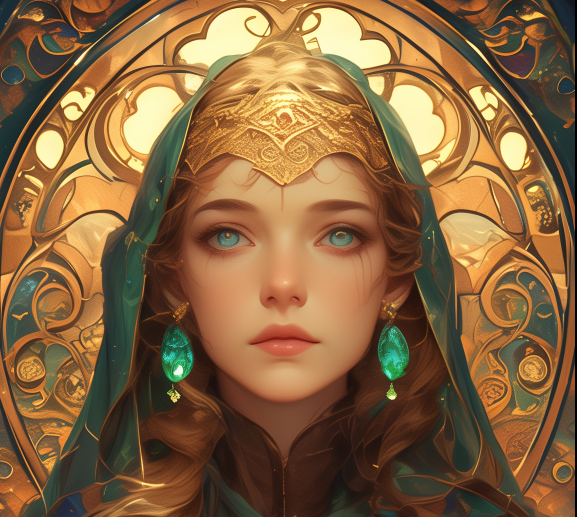
Among the deities of ancient Celtic tradition, Brigid (also spelled Brigit, Brighid, or Brìghde) remains one of the most beloved and enduring figures. Revered across Ireland and beyond, she embodies creativity, nurturing power, and transformative energy. Her presence bridges mythology, folklore, and spirituality — evolving over time yet retaining her essence as a goddess of fire, healing, and inspiration.
Origins and Mythological Role
Brigid is a central figure in Irish mythology, particularly among the Tuatha Dé Danann, a divine race said to have inhabited Ireland before humans. She is often described as the daughter of the Dagda, a powerful father figure, and is sometimes understood as a triple goddess, expressing three unified aspects:
Brigid the Poet — patroness of inspiration, storytelling, and sacred speech
Brigid the Healer — guardian of wells, medicine, and renewal
Brigid the Smith — keeper of fire, craft, and transformation
This triadic nature reflects the Celtic worldview of interconnected forces — creation, healing, and transformation working as one.
The Sacred Story of Brigid
One of the most enduring stories associated with Brigid centers on grief, love, and the birth of keening (ritual lamentation).
Brigid had a son named Ruadán, who fought in a great mythical battle known as the Battle of Moytura. During this conflict between the Tuatha Dé Danann and their enemies, Ruadán was fatally wounded.
When Brigid discovered her son’s death, she let out a cry so profound that it echoed across the land. This cry became the first keening, a traditional Irish mourning song — a blend of wailing, poetry, and raw emotion.
Through this story, Brigid becomes:
The first mourner, giving voice to human grief
The origin of poetic lament, transforming pain into expression
A bridge between loss and healing, showing how sorrow can become art
This myth is powerful because it humanizes a goddess — revealing that even divine beings experience love and loss, and that expression is a path to healing.
Goddess of Fire and Light
Fire lies at the heart of Brigid’s identity. She is associated with both the hearth fire — symbolizing warmth, home, and protection — and the forge fire, representing creation and transformation.
Her sacred flame, once tended in Kildare, was said to burn continuously. Fire in her domain is not destructive but generative: it fuels creativity, sustains life, and forges new realities.
Imbolc and Seasonal Renewal
Brigid is closely tied to the festival of Imbolc, celebrated on February 1st, marking the first stirrings of spring.
During Imbolc:
Homes are cleansed and renewed
Brigid’s crosses are woven for protection
Offerings are made for fertility and inspiration
People welcome the return of light
This festival reflects her role as a bringer of new beginnings, awakening life after winter’s stillness.
Healing and Sacred Wells
Brigid’s healing aspect is linked to sacred wells throughout Ireland. These wells were believed to hold curative properties and became places of pilgrimage.
Rituals often included:
Prayers for healing
Offerings such as cloth or tokens
Walking in circles around the well
Water balances her fire — representing emotional and spiritual restoration.
Sacred Stones and Crystals Associated with Brigid
In modern spiritual traditions, certain stones are associated with Brigid’s energy. While these links are largely symbolic, they align deeply with her domains:
🔥 Fire and Creativity
Carnelian — courage, vitality, creative fire
Sunstone — joy, light, personal power
Garnet — passion, transformation
🌿 Healing and Renewal
Green Aventurine — soothing, heart-centered healing
Moss Agate — growth, fertility, nature connection
Fluorite — clarity and balance
🔮 Inspiration and Wisdom
Amethyst — intuition, spiritual insight
Clear Quartz — amplification of intention
Lapis Lazuli — truth and expression
Grounding and Craft
Hematite — grounding, protection, connection to metalwork
Stones gathered near sacred wells — believed to carry her blessing
These stones are often used in altars, meditation, and Imbolc rituals to invoke her presence.
Brigid’s Archetypes
Brigid’s enduring relevance comes from the powerful archetypes she embodies — universal patterns of energy that still resonate today.
🔥The Creator (The Poet & Smith)
Brigid represents the spark of creation — the ability to bring something new into existence, whether through words, art, or craftsmanship. She reminds us that creativity is sacred.
🌿 The Healer
As a guardian of wells and medicine, she embodies restoration and compassion. This archetype encourages care for both self and others, emphasizing balance and renewal.
🕊️ The Keeper of the Flame
She symbolizes the inner flame — passion, purpose, and spiritual light. This archetype is about tending what matters most and protecting it from being extinguished.
🌸 The Midwife of Transformation
Linked to Imbolc and seasonal change, Brigid guides transitions — helping bring ideas, identities, and new phases of life into being.
The Mourner-Poet
From the story of Ruadán, Brigid embodies the transformation of grief into expression. This archetype teaches that sorrow, when honored, can become wisdom and art.
Symbolism and Legacy
Brigid remains a timeless figure representing:
Creativity and inspiration
Healing and compassion
Transformation and renewal
Light emerging from darkness
Her symbols — fire, water, sacred wells, and even stones — continue to hold meaning in both ancient and modern practices.
Press enter or click to view image in full size
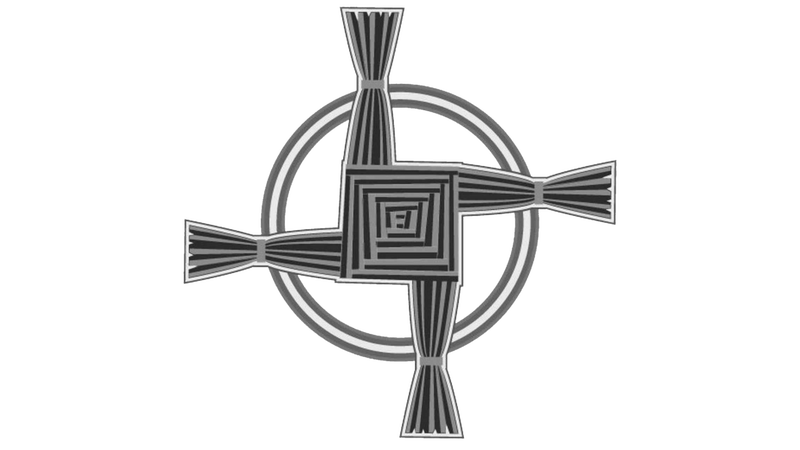
Brigids cross
Brigits Cross
This is a traditional woven symbol associated with the goddess Brigid and later with Saint Brigid of Kildare. It is usually made from rushes or straw and shaped into a four-armed cross with a woven square at the center. Traditionally crafted during the festival of Imbolc, it was hung in homes — especially above doors or hearths — for protection, blessing, and to invite Brigid’s presence.
Conclusion
Brigid is far more than a goddess of myth — she is a living symbol of the cycles of creation, loss, and renewal. Through her stories, her sacred elements, and her archetypes, she speaks to something deeply human: the need to create, to heal, to grieve, and to begin again.
Whether honored through ritual, storytelling, or quiet reflection, her flame continues to burn — guiding those who seek inspiration, strength, and transformation.
References
Lebor Gabála Érenn
Macalister, R.A.S. (trans.) (1938–1956) Lebor Gabála Érenn: The Book of the Taking of Ireland. Dublin: Irish Texts Society.Cath Maige Tuired
Gray, E.A. (1982) Cath Maige Tuired: The Second Battle of Mag Tuired. Dublin: Irish Texts Society.Sanas Cormaic
Meyer, K. (ed. and trans.) (1912) Sanas Cormaic: Cormac’s Glossary. Halle: Max Niemeyer.Miranda Green
Green, M. (1993) The Gods of the Celts. Stroud: Sutton Publishing.Proinsias Mac Cana
Mac Cana, P. (2000) Celtic Mythology. London: Hamlyn.Brigit: Goddess, Druidess and Saint
Wright, B. (1999) Brigit: Goddess, Druidess and Saint. Stroud: The History Press.London: Thames & Hudson.
Juliette Wood
Wood, J. (2007) ‘Brigid and the Goddess Tradition’, in Folklore and Celtic Tradition. Cardiff: University of Wales Press.The Festival of Brigid: Celtic Goddess and Holy Woman
Ó Duinn, S. (2005) The Festival of Brigid: Celtic Goddess and Holy Woman. Dublin: Columba Press.Royal Irish Academy
Royal Irish Academy (various dates) Early Irish manuscripts and texts. Dublin: Royal Irish Academy.
Comments
No comments yet. Be the first to comment!