Godess Isis -Divine mother, mother of Magic, Devotion and Protection
Divine Feminine Series
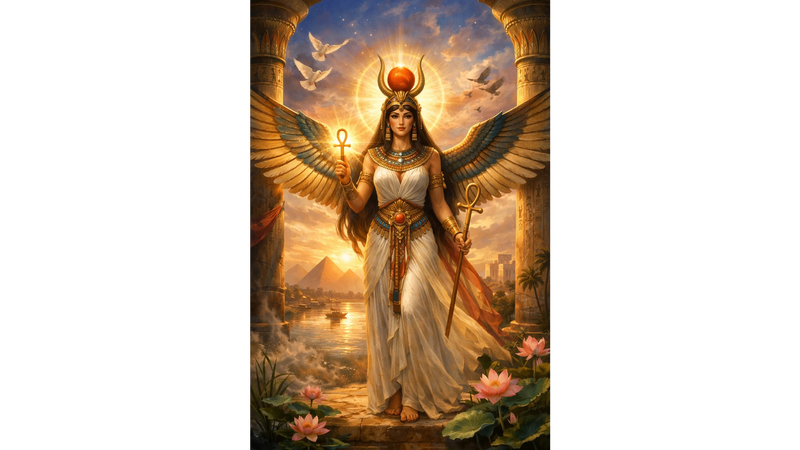
Isis was one of the most revered and influential goddesses in ancient Egyptian religion. Known as the goddess of magic, motherhood, healing, and protection, she was worshipped for thousands of years and eventually became popular throughout the Mediterranean world. Her myths, rituals, and sacred symbols reflect deep Egyptian beliefs about life, death, and spiritual power.
Origins and Divine Family
Isis was born to the earth god Geb and the sky goddess Nut. She was the sister and wife of Osiris and the sister of Set and Nephthys. Isis and Osiris had a son, Horus, who later became associated with kingship and divine protection of Egypt.
This divine family formed an important part of Egyptian mythology and symbolized the struggle between order and chaos.
The Myth of Osiris and Isis
One of the most famous myths of ancient Egypt tells how Set murdered Osiris out of jealousy. According to the story, Set cut Osiris’s body into pieces and scattered them across the land. Isis searched tirelessly throughout Egypt to gather the fragments of her husband’s body.
Using her powerful magic, she restored Osiris to life long enough to conceive their son Horus. Although Osiris did not return permanently to the world of the living, he became the ruler of the underworld. Isis then protected and raised Horus until he was strong enough to challenge Set and restore order.
This myth symbolizes themes of death, resurrection, loyalty, and the triumph of life over destruction.
Powers and Symbolism
Isis was widely known as the Great Magician. Egyptian texts describe her as possessing secret knowledge of spells and healing powers. People prayed to her for protection from illness, danger, and misfortune.
She was often depicted as a woman wearing a throne-shaped crown, representing her name, which means “throne.” In later art she sometimes wore the cow horns and solar disk associated with Hathor.
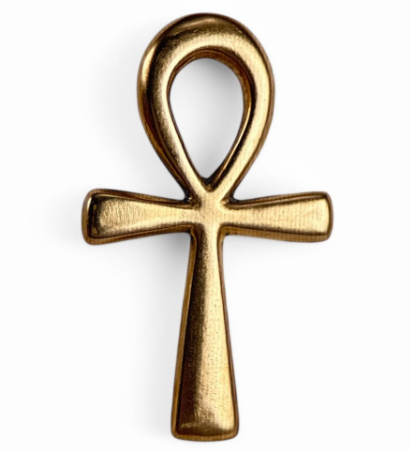
Another powerful symbol linked to Isis was the Tyet knot, often called the “Knot of Isis.” This amulet symbolized protection, life force, and divine feminine power.
Sacred Stones Associated with Isis
Sacred stones played an important role in Egyptian religious symbolism and were often used in amulets and ritual objects dedicated to Isis. Egyptians believed these stones carried spiritual energy connected to the gods.
Lapis Lazuli was associated with the heavens and divine wisdom. Its deep blue color symbolized the sky and cosmic order, reflecting Isis’s connection to magical knowledge.
Carnelian, a reddish-orange stone, represented vitality, protection, and the life force. Amulets made of carnelian were often worn for protection and placed in tombs to safeguard the dead.
Turquoise symbolized joy, rebirth, and protection. Mined in the Sinai Peninsula, it was frequently used in jewelry and temple offerings connected with protective deities such as Isis.
Green stones, such as green feldspar or emerald-like minerals, represented fertility, growth, and regeneration. These stones reflected the myth of Isis restoring life to Osiris.
These materials were commonly carved into protective amulets, including the Tyet knot, which was often placed on mummies to ensure safety in the afterlife.
Ritual Practices and Worship
Ritual worship of Isis took place in temples and through personal devotion. Priests performed daily ceremonies in temples dedicated to the goddess, especially at sacred sites such as Philae.
Temple rituals typically included purification with water and incense, the presentation of food and flowers, and the recitation of sacred hymns and magical texts. Priests would also wash, clothe, and decorate the statue of Isis each day as part of the ritual honoring her divine presence.
Isis was also widely invoked in healing rituals. Priests and healers used spells, prayers, and amulets while calling upon her magical power to cure illness or protect against danger.
Funerary Traditions
Because Isis helped revive Osiris, she became strongly connected with funerary beliefs and the journey of the soul after death. Amulets representing the Knot of Isis were sometimes placed on the bodies of the deceased to protect them in the afterlife.
In funerary texts and tomb decorations, Isis was often shown spreading her wings over the dead, symbolizing her role as a guardian and protector.
Festivals and Public Celebrations
Large festivals dedicated to Isis were celebrated in cities such as Alexandria and throughout the Egyptian world. These festivals often included processions, music, offerings, and dramatic reenactments of the myth of Osiris and Isis.
One important celebration symbolized Isis’s search for Osiris and the restoration of life. These rituals expressed hope for renewal, rebirth, and the eternal cycle of nature.
Legacy of Isis
The worship of Isis eventually spread far beyond Egypt during the Greek and Roman periods. Her temples appeared across the Mediterranean, and she was revered as a universal mother and protector of humanity.
Even after the decline of ancient Egyptian religion, the figure of Isis continued to influence art, mythology, and spiritual traditions. Today she remains one of the most recognizable and powerful symbols of ancient Egyptian culture, representing devotion, magical wisdom, and the enduring power of life and rebirth.
References
The Complete Gods and Goddesses of Ancient Egypt. Thames & Hudson, 2003.
Egyptian Mythology: A Guide to the Gods, Goddesses, and Traditions of Ancient Egypt. Oxford University Press, 2002.
The Oxford History of Ancient Egypt. Oxford University Press, 2000.
The Egyptian Book of the Dead, translated by E. A. Wallis Budge.
The British Museum — Collections and research on Egyptian religion and artifacts.
Comments
No comments yet. Be the first to comment!